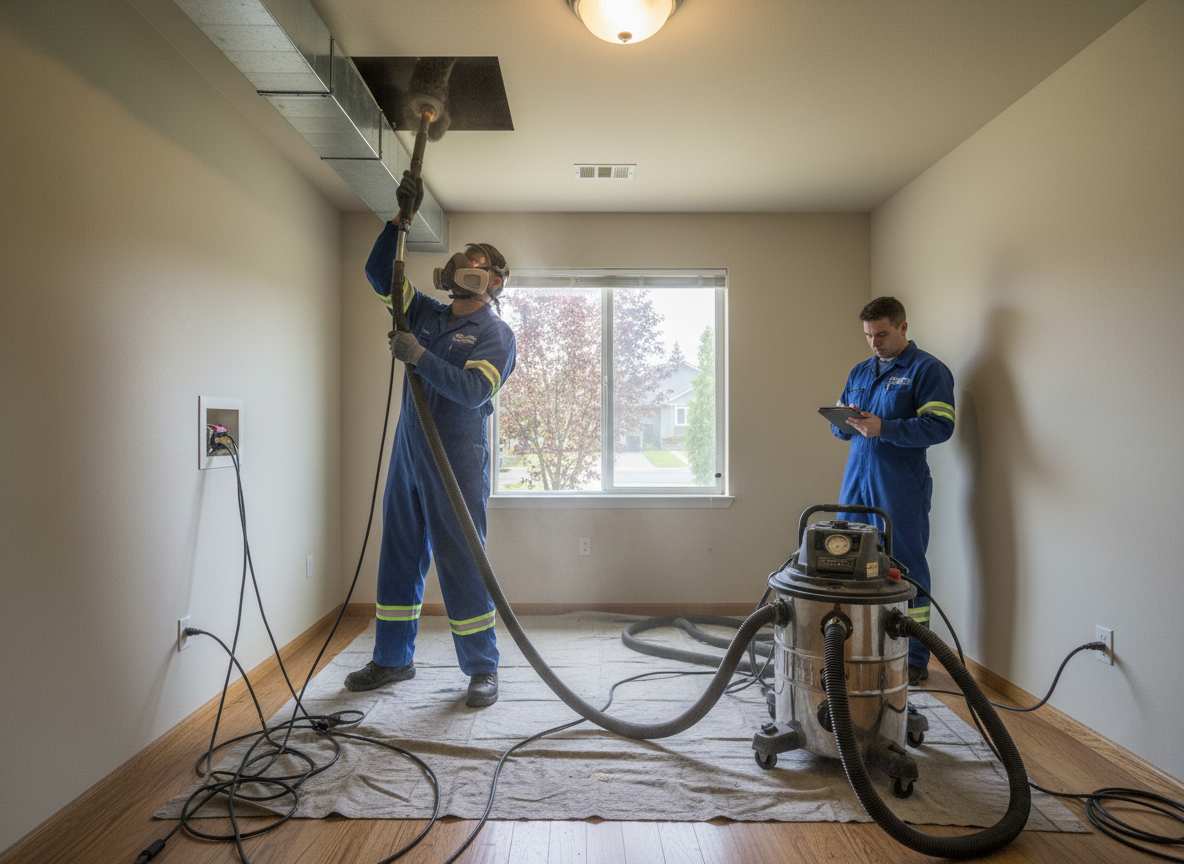
Gresham homes built before the 1980s in Rockwood and near Downtown often feature rigid metal trunk lines with flexible branch runs that trap moisture during the region's wet winters. When occasional flooding occurs along lower elevations around Gresham Pioneer Cemetery, water can enter crawlspace ducts and promote mold growth that standard residential vacuums cannot reach. Whole house cleaning requires negative-pressure equipment staged outside to avoid redistributing spores into living spaces while technicians access each register and the main trunk through existing openings.
Mild summers reduce the urgency for cooling-season work, yet pollen from surrounding trees and dust from nearby Mt. Hood Community College construction projects still accumulate in return plenums. In Multnomah County homes with original fiberglass duct board, aggressive agitation can dislodge fibers, so technicians use soft-bristle brushes and HEPA-filtered collection only. Post-clean verification includes checking for proper static pressure to confirm no collapsed flex runs were missed during the wet-season inspection.
Flood-prone lots near Burnside Road frequently have ducts routed through crawlspaces that sit below grade. These runs collect silt that standard brushes push deeper into elbows unless technicians first remove standing water and then perform a two-stage extraction. Homes connected to Portland's older shared sewer lines can also experience backdraft odors after heavy rain, requiring the cleaning to include odor-neutralizing fogging only after the mechanical removal step is complete.
Technician insight
In Gresham, the thing that catches most people out with whole house air duct cleaning is how wet winters push silt into crawlspace ducts on older Rockwood lots. Homeowners often assume a standard vacuum job will clear it, but the silt packs into elbows and stays until two-stage extraction is used. Homes near Mt. Hood Community College also collect extra construction dust that travels through shared return paths.
Rockwood Crawlspace Flood Cleanup
A 1970s home near Gresham Pioneer Cemetery showed persistent musty odors after winter rains. Inspection found silt and standing water in two trunk lines routed below grade. Technicians removed the water, performed mechanical extraction on the packed elbows, and verified airflow before sealing access points. Air quality improved and no further odors returned.
How it works
- 1
Site Assessment
Technicians inspect every accessible duct section, note construction type, and identify water intrusion points common after Gresham winters.
- 2
Negative Pressure Setup
Equipment is placed outside the home to pull debris through the system without pressurizing living areas in Rockwood or Downtown properties.
- 3
Mechanical Agitation and Extraction
Brushes and compressed air tools loosen buildup while HEPA collection removes it, paying special attention to flex runs damaged by past flooding.
- 4
Final Verification
Each register and trunk line is checked for airflow and cleanliness before the system is returned to normal operation.
Pricing
Pricing varies by square footage, number of flex runs, and any water-damage remediation required; upfront quotes provided after inspection.