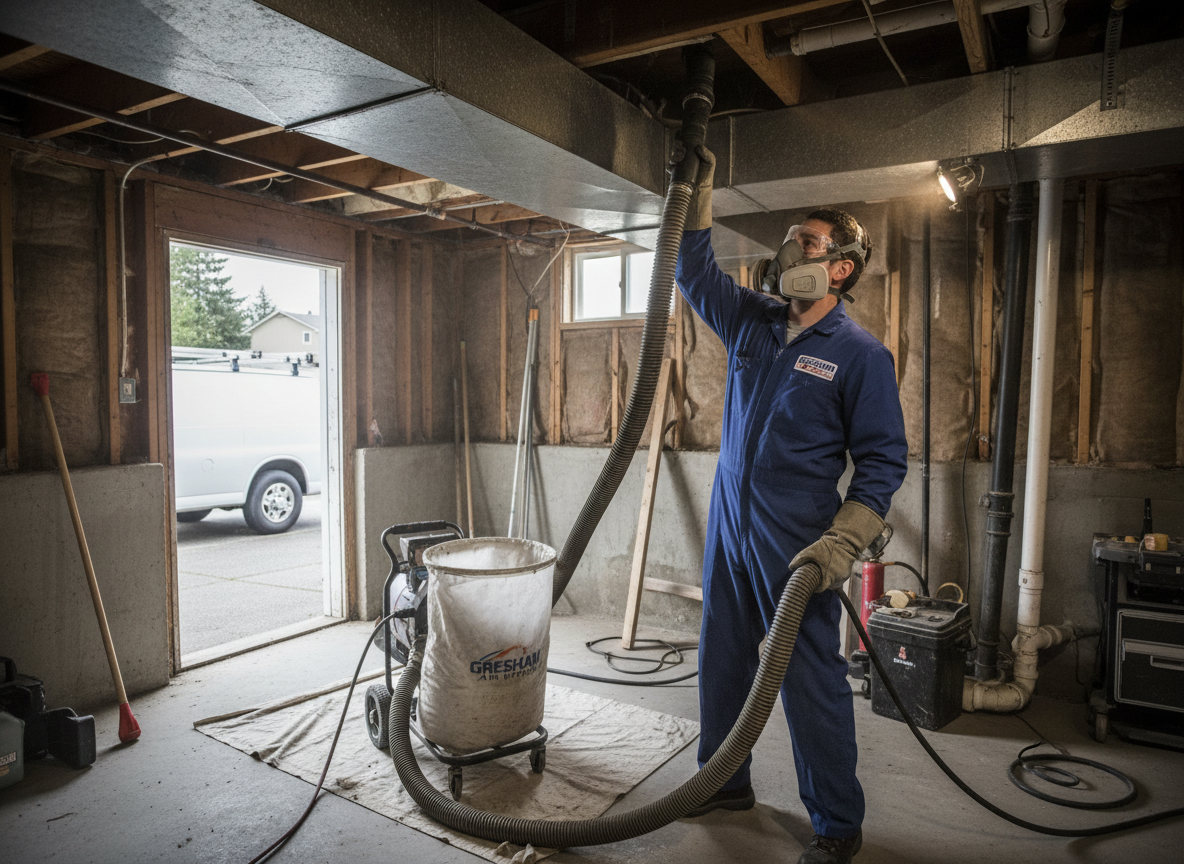
Gresham homes built before 1980 often feature trunk-and-branch duct runs routed through crawl spaces that sit close to the water table in Multnomah County. Wet winters bring repeated moisture cycles that deposit fine silt and promote mold on fiberglass liners. Technicians must pull registers first, then use negative-air machines sized for the actual static pressure of each branch rather than a one-size-fits-all unit. Skipping this step leaves residue that later circulates when mild summer temperatures increase system runtime.
Flood-prone pockets near the Gresham Pioneer Cemetery and along the edges of Mt. Hood Community College require extra containment barriers and post-job drying verification. Crews check for standing water in low points before introducing rotating brushes or compressed-air whips. In Rockwood bungalows with original metal ducts, seams can separate under aggressive cleaning, so inspection with a bore-scope precedes any mechanical action. Portland commuters who leave systems idle for long stretches see heavier dust loading once the furnace restarts after the first cold snap.
Access limitations in Downtown two-story homes with finished basements force the use of smaller 1.5-inch whips and multiple entry points rather than a single large access door. Technicians document every opening with photos so homeowners can verify restoration. Mild summers reduce the urgency for same-day service, yet 24/7 availability from the 786 NE Burnside Rd shop still matters when sudden fall storms push debris into intakes.
Technician insight
In Gresham the thing that catches most people out with professional air duct cleaning is how wet winters push fine silt into the lowest duct runs in Rockwood crawl spaces. Homeowners assume a standard vacuum job will clear it, but that silt cakes on old liner seams and only moves when you combine agitation with continuous negative pressure. Miss the low points near the Gresham Pioneer Cemetery and the system just recirculates the same grit once mild summer weather kicks the furnace back on.
Downtown Gresham Bungalow After Fall Storm
Heavy rain had forced water under the floor joists and into the return duct near the front porch. The camera showed silt coating the bottom third of the main trunk and a small separation at one elbow. We set up containment, agitated the branch with a 1.5-inch whip while the negative-air unit ran, then dried the liner before sealing the seam. Airflow readings returned to normal and the homeowner reported no more musty smell on startup.
How it works
- 1
Initial Walk-Through
Map every supply and return in the home, noting access points and any signs of past moisture from Gresham's wet winters.
- 2
Negative-Air Setup
Place HEPA-filtered machines at the furnace and seal registers to contain dust before mechanical cleaning begins.
- 3
Mechanical Agitation
Run whips or brushes through each branch while the vacuum pulls debris, paying extra attention to low points that collect silt after flooding.
- 4
Final Inspection
Re-check with a camera, restore all openings, and confirm airflow before leaving the Rockwood or Downtown property.
Pricing
Upfront quotes based on number of runs, access difficulty, and any moisture remediation needed after wet winters.