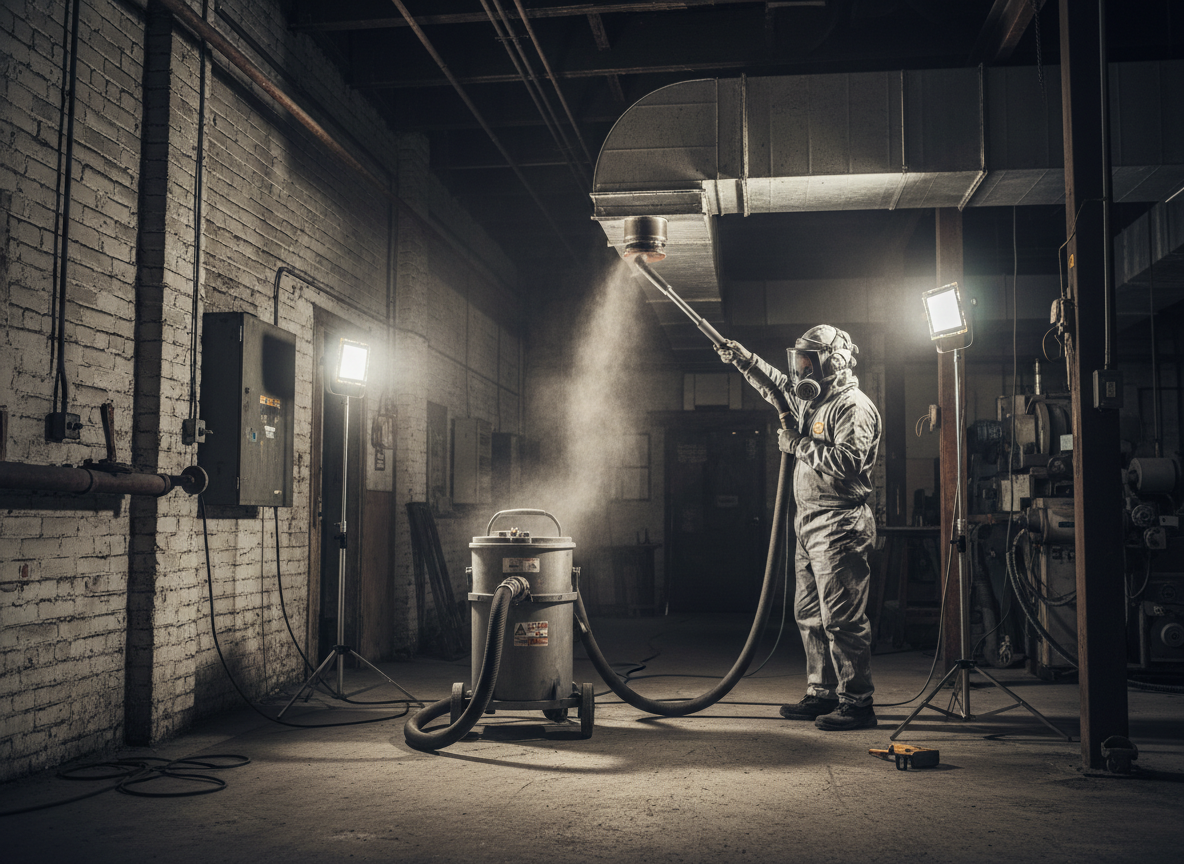
Gresham industrial sites often sit in older buildings clustered near Rockwood and along routes toward Portland. These structures frequently feature large sheet-metal trunk lines and rooftop units exposed to the county's wet winters. Moisture from seasonal flooding can carry fine silt and organic debris into return plenums, creating hidden buildup that standard residential methods miss. Technicians must isolate sections, manage negative pressure carefully, and verify that condensate drains remain clear before sealing access points.
Work near Mt. Hood Community College and Downtown Gresham commonly involves mixed-use facilities with both manufacturing exhaust and HVAC returns sharing the same chase spaces. Mild summers reduce thermal stress but allow pollen and street dust from Burnside Road corridors to accumulate steadily. Access panels in these buildings are often offset or undersized, requiring drop cloths and HEPA containment to protect active production floors. Skipping proper isolation risks cross-contamination between zones that operate on different schedules.
Flood events in Multnomah County can push water into below-grade mechanical rooms common in Rockwood warehouses. Once ducts dry, residual sediment hardens inside elbows and transitions, raising static pressure and shortening equipment life. Industrial cleaning here includes mapping every branch, removing access covers without disturbing fire dampers, and documenting pre- and post-clean airflow readings so operators can confirm performance before restarting processes.
Technician insight
In Gresham, the thing that catches most people out with Industrial air duct cleaning is how occasional flooding leaves fine silt that hardens inside elbows near Rockwood warehouses. Older buildings along Burnside Road often have undersized access panels and shared chases that force extra containment steps you don't see in newer Portland facilities.
Sediment Buildup After Winter Flooding
A Rockwood warehouse reported rising energy bills after heavy winter rains. Inspection found hardened silt in low-lying return ducts that had been submerged. We isolated the affected runs, agitated and extracted the debris under negative pressure, then confirmed restored airflow before production resumed.
How it works
- 1
Site Assessment
Inspect all accessible trunk lines, returns, and exhaust connections while noting flood-prone low points and shared chases typical in Gresham industrial buildings.
- 2
Containment Setup
Install negative-air machines and sealed barriers to protect active production areas from disturbed debris during the cleaning process.
- 3
Mechanical Cleaning
Use rotary brushes and compressed-air whips sized for large-diameter ducts, followed by HEPA vacuum collection at each access point.
- 4
Verification and Reassembly
Measure airflow before and after, photograph cleaned sections, and reinstall all panels with new gaskets where needed.
Pricing
Upfront quotes provided after on-site assessment of system size, access, and any flood-related sediment.