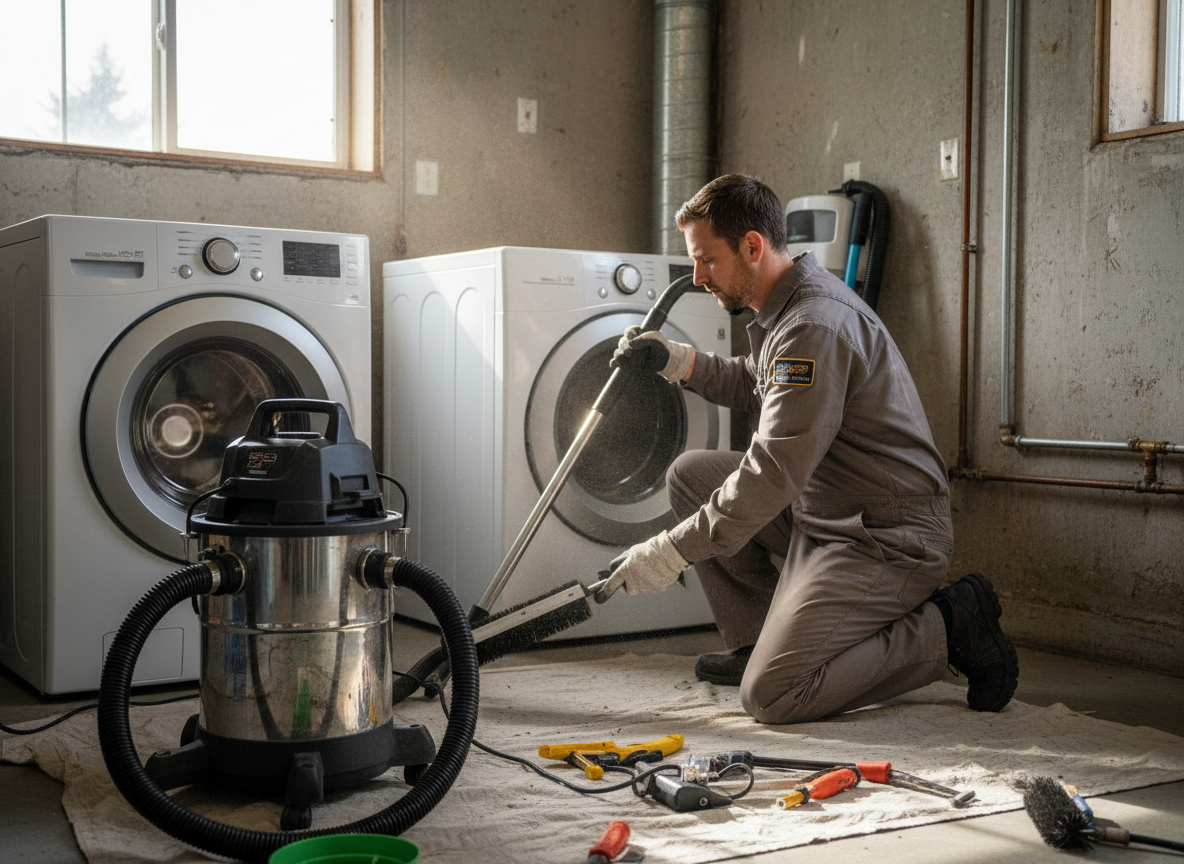
Gresham’s older homes in Rockwood and Downtown often feature long horizontal dryer vent runs routed through crawl spaces or exterior walls that collect lint rapidly during the wet winters common across Multnomah County. Moisture from frequent rain and occasional flooding keeps lint damp, raising fire risk and forcing the dryer to run longer. Technicians at DuctFlow Renew clear these runs from the 786 NE Burnside Rd base using rotary brushes sized for 4-inch and 6-inch ducts, then verify airflow with a manometer before reassembly.
Mild summers do little to dry out vents that stay damp from winter, so lint near the exterior termination can harden into a cement-like plug that standard vacuum tools miss. Crews inspect the vent cap at the home’s exterior, remove bird nests common near Mt. Hood Community College green spaces, and replace crushed or separated sections of flexible duct that trap moisture. Every job ends with a before-and-after airflow reading so homeowners see the difference without vague promises.
Portland commuters in Gresham frequently install dryers in laundry rooms added during 1970s–1990s remodels, creating 90-degree bends and low spots where water pools. These configurations require section-by-section disassembly rather than a single pull-through. The team documents each turn, photographs hidden blockages, and leaves the vent routed with smooth metal pipe where code allows, cutting future lint traps without altering the home’s layout.
Technician insight
In Gresham, the thing that catches most people out with dryer vent cleaning is how our wet winters keep lint damp inside long horizontal runs common in Rockwood ranch homes. Homeowners often think a quick vacuum at the dryer is enough, but that leaves the section behind the wall untouched until it hardens. The fix is always to reach the full length from the exterior rather than stopping at the first elbow.
Rockwood Ranch Vent Blocked After Winter
A Rockwood homeowner noticed the dryer taking twice as long after heavy winter rains. Inspection found standing water and hardened lint in a low spot behind the laundry room wall. The crew disassembled the run, cleared the plug, replaced one crushed elbow, and restored full airflow before the next rain cycle.
How it works
- 1
Initial Inspection
Technician examines vent length, turns, and exterior termination from the Gresham address, noting any low spots prone to standing water after winter rains.
- 2
Mechanical Cleaning
Rotary brush and vacuum system removes compacted lint from the full run, paying special attention to sections passing near the Gresham Pioneer Cemetery area where older homes have longer exterior walls.
- 3
Moisture Check and Drying
Any residual damp lint is extracted and the line is dried to prevent mold regrowth during Multnomah County’s wet season.
- 4
Reassembly and Airflow Test
Vent is reassembled with proper supports, airflow is measured, and the homeowner receives a written report of findings.
Pricing
Upfront quote based on vent length, number of turns, and access difficulty; no hidden fees.