Gresham basements in Rockwood and Downtown neighborhoods often sit on older concrete slabs that wick moisture during the county's wet winters. When floodwaters rise near the Gresham Pioneer Cemetery or along Burnside Road corridors, water can enter unsealed duct boots and low runs, leaving behind silt that standard vacuuming misses. Metal ductwork common in homes built before the expansion around Mt. Hood Community College corrodes faster once that dampness lingers, creating pinhole leaks that pull basement air into living spaces year-round.
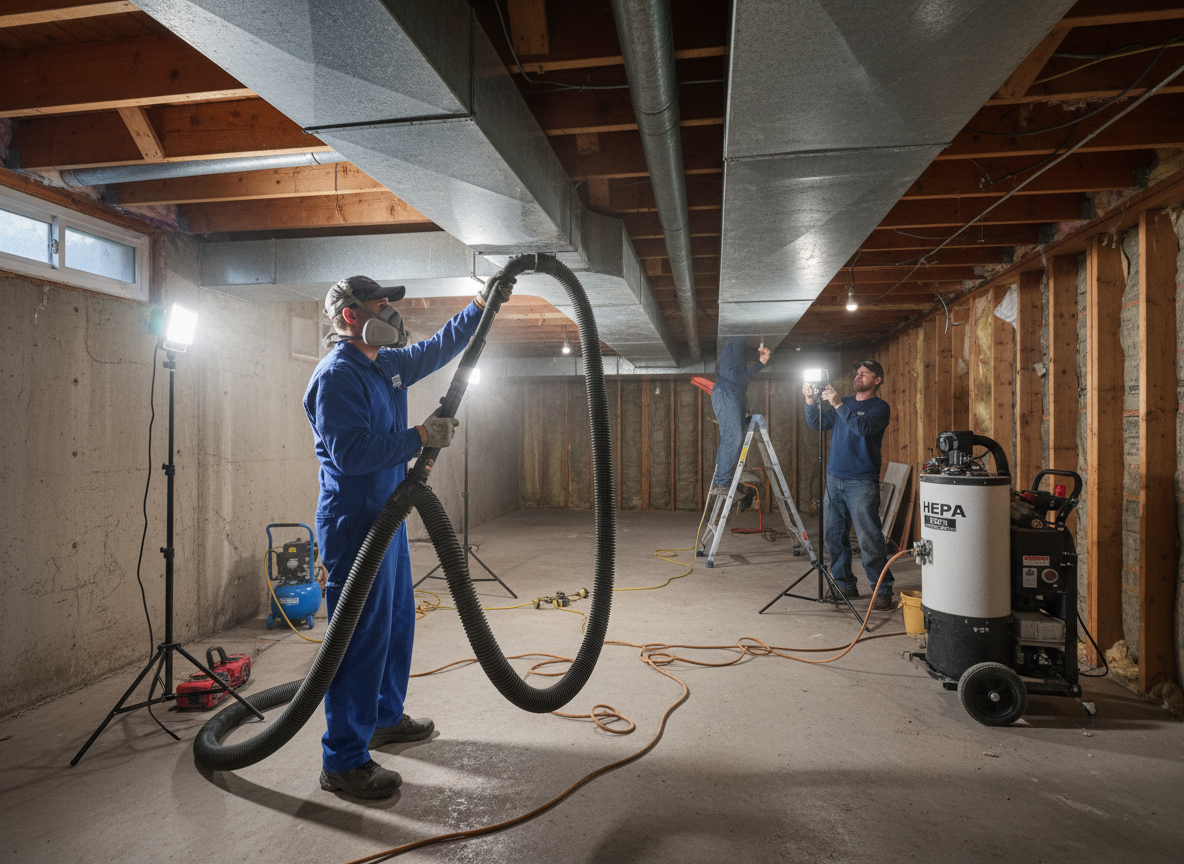
Mild summers do not dry these lower levels the way higher elevations near Portland do, so homeowners notice persistent musty odors even after surface cleaning. We use negative-air machines staged at exterior vents to keep loosened debris from migrating upstairs, then reach branch lines behind finished walls with flexible whips sized for the narrow 4-inch and 6-inch runs typical in Gresham split-levels. Access panels cut only where necessary are sealed with mastic rated for the area's soil moisture levels rather than standard tape that fails after one more winter cycle.
Edge cases include ducts routed under slabs that have settled unevenly, trapping standing water until we isolate and flush each section. We also check for disconnected flex runs near laundry areas where high humidity from dryers compounds the seasonal dampness. Every job ends with a camera sweep to confirm no residue remains before we restore airflow and document the condition for the homeowner.
Technician insight
In Gresham, the thing that catches most people out with basement air duct cleaning is how wet winters push water into low runs near older slabs in Rockwood homes; that residual moisture stays trapped until we flush and dry the lines, and skipping it means mold returns within one season even after surface cleaning.
Rockwood Flood-Affected Ducts
A Rockwood homeowner reported musty air after winter rains reached the foundation. Inspection showed silt and standing water inside the main basement trunk feeding the first floor. We isolated the section, flushed debris, and ran HEPA drying for 48 hours. Follow-up camera confirmed clear lines and no odor remained.
How it works
- 1
Site Assessment
We inspect all accessible basement runs, note moisture stains, and map duct layout relative to known flood paths in Rockwood and Downtown.
- 2
Containment Setup
Negative-air machines and sealed barriers prevent dust migration to upper floors while we open only the minimum number of access points.
- 3
Mechanical Cleaning
Rotary brushes and compressed-air whips remove debris from rigid and flex lines without damaging older sheet-metal seams common in Gresham homes.
- 4
Drying and Verification
We apply HEPA-filtered drying to any damp sections, then perform a final camera inspection before resealing all openings.
Pricing
Pricing is determined after inspection because basement access, duct age, and moisture levels vary widely between Rockwood and Downtown properties.