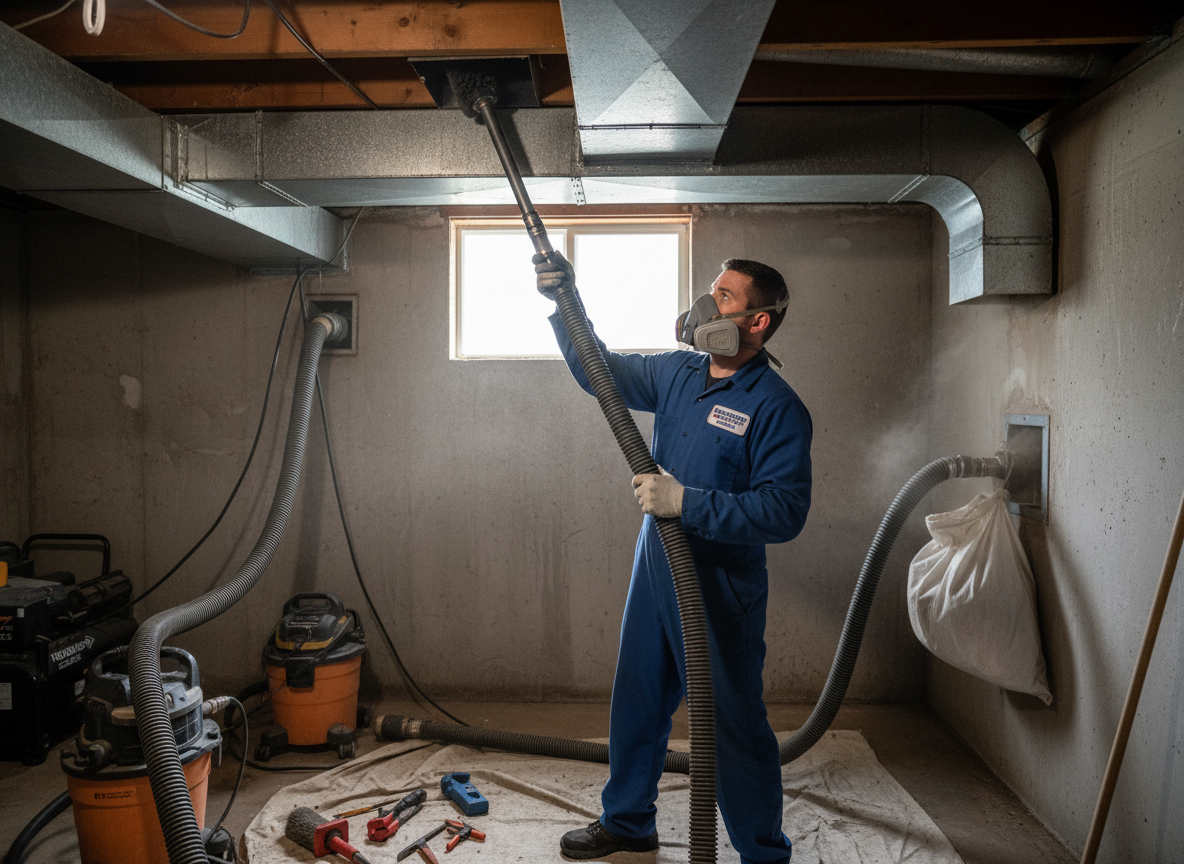
Gresham’s older homes near the Gresham Pioneer Cemetery and Mt. Hood Community College often feature ductwork installed decades ago that collects fine silt from wet winters and occasional flooding. These conditions promote moisture buildup inside supply lines, especially in crawlspaces common to Rockwood properties, creating spots where airflow restricts and odors travel between rooms. Technicians must pull registers carefully and use negative-air machines rated for the mild summers that follow, when pollen loads spike from nearby Portland green spaces.
Dryer vent runs in Multnomah County homes frequently terminate in areas prone to leaf litter and light flooding runoff, forcing lint to pack tighter than in drier climates. Standard brushes alone miss the 90-degree elbows typical in 1970s construction around Downtown Gresham, so rotary whips and camera inspection become necessary to confirm full clearance. Homeowners sometimes attempt partial cleaning themselves, leaving compacted sections that later cause vent flap failure during heavy winter rains.
Service calls start with a full-system mapping from the 786 NE Burnside Rd base, noting trunk line size and any added returns from Portland-style remodels. Crews then isolate the furnace and dryer, attach HEPA filtration, and agitate each branch before vacuum extraction. Final steps include re-securing registers and testing static pressure to verify restored flow without introducing new leaks in aging duct joints.
Technician insight
In Gresham, the thing that catches most people out with air duct and dryer vent cleaning is how wet winters push groundwater vapor into older crawlspace ducts around Rockwood, turning light lint into a sticky mat that standard brushes slide over. Homeowners near Mt. Hood Community College often miss the elbows where that mix hardens, so the job always takes longer than the same house would in drier parts of Portland.
Rockwood Flood-Affected Ducts
A Rockwood homeowner called after noticing musty air following winter flooding. Inspection showed compacted lint and silt in the main trunk near the Gresham Pioneer Cemetery area. Crews isolated the system, used rotary agitation plus negative air to clear the packed sections, then verified restored flow and dry conditions inside the ducts.
How it works
- 1
Initial Assessment
Map every accessible duct run and dryer vent termination while noting moisture evidence from Gresham’s wet season.
- 2
Isolation and Setup
Seal the HVAC system and attach negative-air equipment at the 786 NE Burnside Rd truck before agitation begins.
- 3
Agitation and Extraction
Use whips and brushes on each branch, followed by HEPA vacuum to remove lint, silt, and debris loosened by seasonal dampness.
- 4
Reassembly and Verification
Reinstall registers, test airflow, and confirm dryer vent flap operates freely after clearing any flood-related blockages.
Pricing
Cost varies by number of runs, home age, and any moisture-related complications common after Multnomah County winters.