2026-10-24 ·
How Spring Pollen from Local Trees Affects Gresham Air Ducts
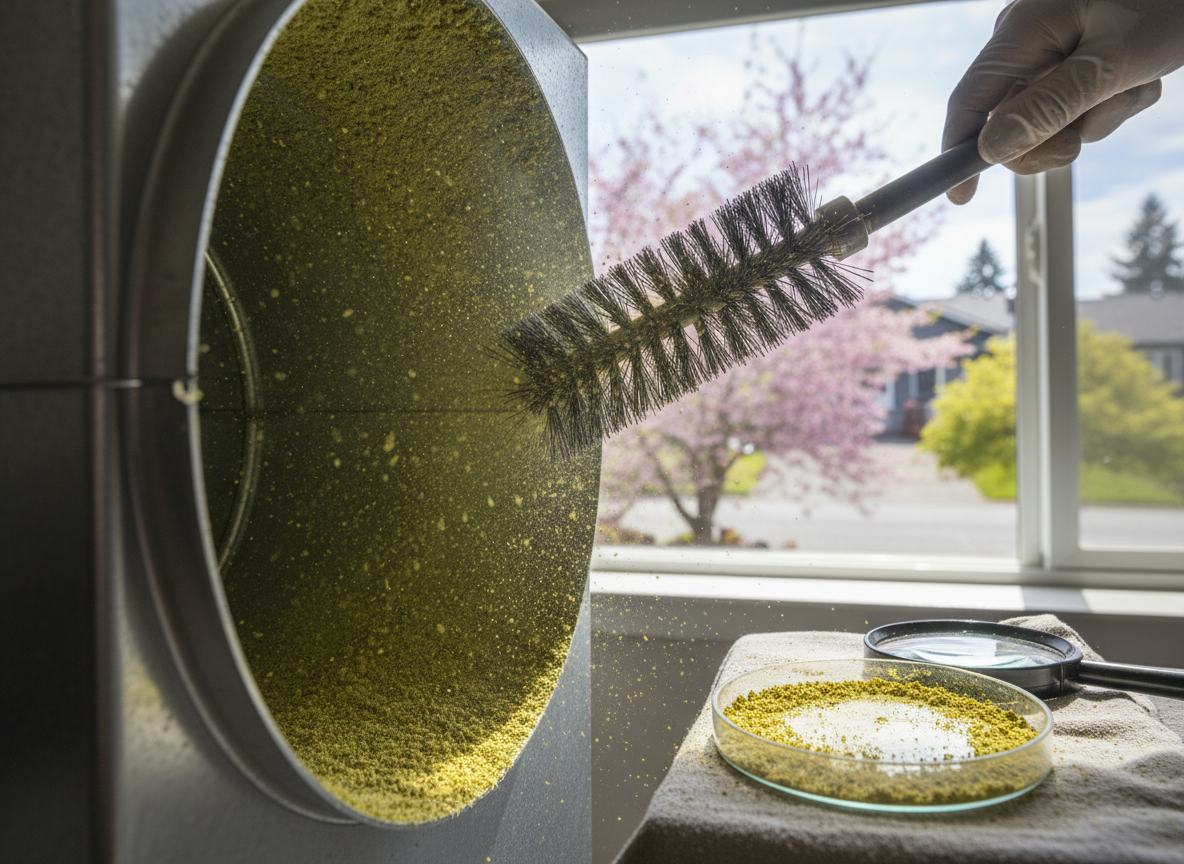
Spring pollen from local trees such as oak and maple enters Gresham air ducts through open windows and HVAC intakes during mild summers, where it mixes with dust and settles in return vents and supply lines, raising allergen loads in homes across Rockwood and Downtown.
Local Tree Pollen and Gresham Housing Stock
Gresham homes built before 1980 in neighborhoods like Downtown and Rockwood often feature single-story ranch styles with metal or flex duct runs that trap fine particles more readily than newer sealed systems. Pollen grains from trees around Gresham Pioneer Cemetery and Mt. Hood Community College travel easily on spring breezes into these older ducts. Wet winters with occasional flooding in Multnomah County push additional moisture and outdoor debris through foundation vents, creating sticky surfaces where pollen adheres. This combination means pollen does not simply blow through but lingers in low-velocity sections of the ductwork, particularly near the 786 NE Burnside Rd corridor where many mid-century homes sit.
How Wet Winters and Mild Summers Interact with Pollen
After Multnomah County winters bring repeated rain and occasional flood events, residual moisture in duct insulation or on metal surfaces attracts spring pollen once temperatures rise. Mild summers keep HVAC systems running longer for cooling, circulating the trapped pollen throughout living spaces in Rockwood and near Portland. The pattern repeats yearly because Gresham sits in a transitional climate zone where winter saturation meets extended dry pollen seasons. Homeowners notice heavier buildup on furnace filters by late May when local trees drop their heaviest loads near Mt. Hood Community College grounds.
Effects on Indoor Air Quality in Rockwood and Downtown
Pollen accumulation reduces airflow efficiency in residential systems serving older Gresham homes, forcing blowers to work harder during summer months. In Rockwood especially, where many properties back up to green corridors, visible yellow dust appears on supply registers by early summer. Downtown homes closer to busy streets see pollen combine with vehicle dust, creating denser clogs in return vents. This leads to uneven temperatures between rooms and increased musty odors when systems restart after wet periods. Residents in these neighborhoods often report more frequent filter changes from March through June compared with drier inland areas.
Practical Steps for Gresham Homeowners
Inspect return vents monthly during pollen season for visible yellow residue, starting in areas near Gresham Pioneer Cemetery where tree density is high. Schedule professional cleaning before summer heat arrives to remove the combined winter debris and spring pollen load. Consider air duct cleaning for allergies if family members experience worsened symptoms after windows stay open. Review Signs of Moisture Issues in Ducts After a Wet Gresham Winter to understand how prior flooding may have prepared surfaces for pollen adhesion. Check systems in homes near Portland for cross-contamination if ducts connect to crawl spaces that collect standing water.
When to Schedule Service in Multnomah County
Homes in Rockwood and Downtown typically benefit from inspection every three years when pollen loads are heavy, especially if the property sits on lower ground prone to winter flooding. Technicians familiar with Gresham’s mix of wet winters and mild summers can target the sections where pollen cakes onto moist insulation. This timing prevents the buildup from migrating into living areas during the next cooling season. Local operators at 786 NE Burnside Rd operate 24/7 to accommodate spring scheduling around work and school calendars common in the Mt. Hood Community College vicinity.